
Optogenetics Advances Brain Research, Offers Hope for Neurological Disorders
Optogenetics, a revolutionary scientific method that uses light to control the activity of neurons, is opening up groundbreaking possibilities for treating complex neurological conditions such as dementia, depression and blindness.
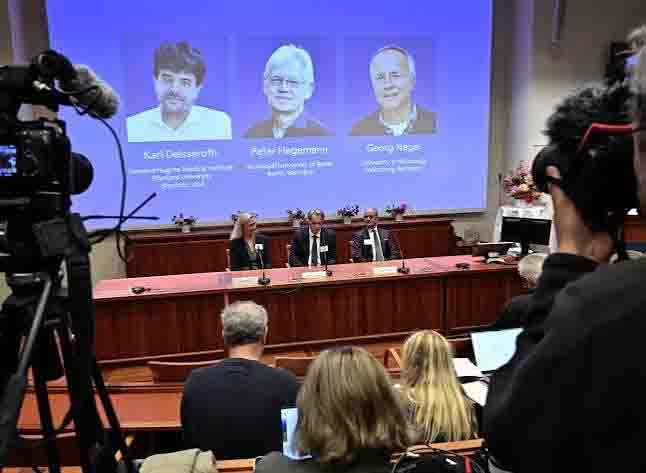
On October 5, three pioneering scientists were jointly awarded the 2026 Nobel Prize in Physiology or Medicine for their monumental contributions to this field. The laureates are Dr. Karl Deisseroth (54), a neuroscientist and professor at Stanford University, USA; Dr. Peter Hegemann (71), a biophysicist and professor at Humboldt University of Berlin, Germany and Dr. Georg Nagel (73), a biophysicist and professor at the University of Wrzburg, Germany.
They will share the total monetary prize of 12 million Swedish kronor equally.
Highlighting the profound impact of this innovation, Dr. Simon Schultz, Professor of Neurotechnology at Imperial College London, said, "The ability to control cells using a combination of optics and genetics has brought about transformative changes across all branches of biology."
Key insights regarding optogenetics and its therapeutic applications are outlined below:
Discovery of Channelrhodopsin
The journey began when Professor Hegemann and Professor Nagel discovered a light-sensitive protein in a species of green algae, which they named 'Channelrhodopsin'. Building on this discovery, Professor Deisseroth successfully engineered a method to introduce this protein into specific cells using genetic tools. By exposing these cells to light, he was able to activate neural pathways in laboratory mice, marking a historic milestone in neuroscience.
Mapping Brain Behavior and Functions
By manipulating light exposure, scientists can now turn neural signals on and off with pinpoint precision. Suppressing certain neurons while observing the activity of others allows researchers to map exactly which regions of the brain control specific actions.
During the prize announcement, Professor Dr. Abdel El Manira, a neuroscientist and member of the Nobel Committee for Physiology or Medicine, remarked that this discovery has provided profound insights into diverse behaviors-ranging from "parenting behaviors and aggression to anxiety, fear and even fundamental physiological drives like thirst and water intake".
Restoring Memory Loss
Professor Schultz noted that his research team has utilized optogenetics in a "closed-loop" system to treat memory-related disorders. This approach extends the duration of light pulses that assist the brain in retaining memories.
"The next step is to prove whether we can enhance learning capacity and memory retention during complex tasks," he shared in a commentary published by Imperial College.
A New Hope to Eradicate Blindness
Dr. Jos‚-Alain Sahel, Chair of the Department of Ophthalmology at the University of Pittsburgh School of Medicine, USA, said that his team has conducted highly promising clinical trials using optogenetics to treat degenerative eye diseases. Through gene therapy, they inserted the light-sensitive protein into the damaged retinal cells of a patient. Using specialized bio-engineered goggles to project light onto the eye, they successfully reactivated the retina.
Dr. Marco Tripodi, a Senior Molecular Biologist at the University of Cambridge, UK, emphasized, "The most promising area for relatively rapid clinical advancement is undoubtedly visual restoration."
Combating Parkinson's and Epilepsy beyond direct therapeutic applications, Dr. Tripodi noted that optogenetics serves as an invaluable research tool to identify new therapeutic targets for neurological and psychiatric diseases.
He pointed out epilepsy and Parkinson's disease as two clear examples where the ability to precisely control specific neuronal clusters could ultimately prove vital.
Similarly, Dr. Jorge Brotons-Mas, a neuroscientist at CEU Cardenal Herrera University in Spain, stated in a commentary published by the Science Media Centre, UK, that this Nobel-winning research will significantly aid scientists in understanding the exact neural malfunctions behind illnesses like Alzheimer's disease and epilepsy.
Mental Health and PTSD Management
Several scientists highlighted that addressing depression and anxiety disorders remains a core objective of this technology. Dr. Christopher Rowlands, an Associate Professor in the Department of Bioengineering at Imperial College, mentioned that early-stage trials are currently underway to explore the efficacy of optogenetics in treating Post-Traumatic Stress Disorder (PTSD) and addiction.
Future Challenges and Clinical Limitations
Medical researchers emphasize that while the technology has achieved immense success in animal models, applying it to humans presents logistical hurdles.
Directing light into the human brain traditionally requires inserting invasive optical fibers through the skull. To circumvent this, scientists are actively developing wireless nanotechnology and near-infrared light systems capable of penetrating the skull non-invasively to stimulate the proteins.
Resolving these challenges will pave the way for widespread clinical usage.
Consciousness and Artificial Intelligence
During the Nobel press conference in Stockholm, Sweden, journalists inquired whether this technology could bridge our understanding between the human brain and artificial neural networks, or help decode the nature of subjective human consciousness.
In response, Professor El Manira clarified, "For now, this technology does not help us fully grasp what consciousness is, but it is deeply enhancing our comprehension of the brain's complex networks."
He confidently added, "I am certain that a few years down the line, we will see another Nobel Prize rooted in the expansions of this very technology."
