
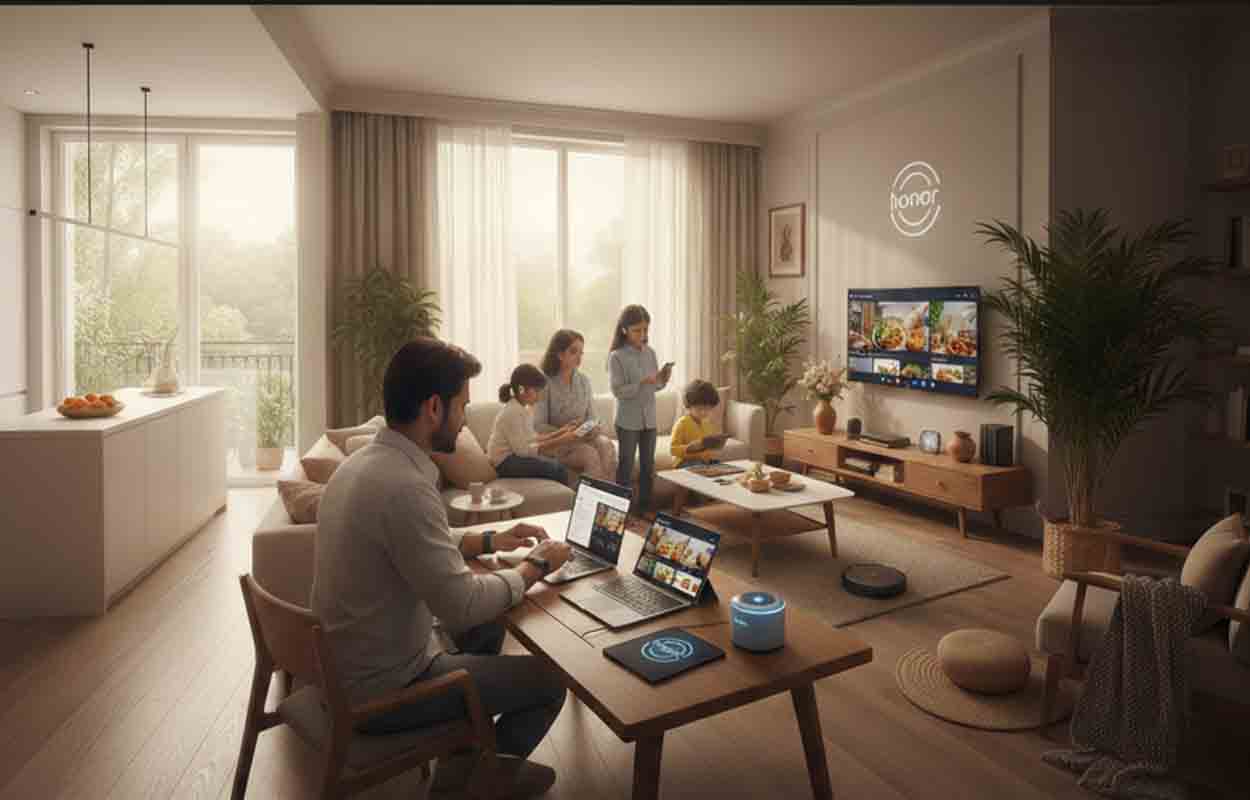
Smartphone industry is rapidly shifting toward AI-powered ecosystems
The global smartphone industry is rapidly shifting toward AI-powered ecosystems and transforming smartphones from standalone devices into interconnected digital hubs.
In Bangladesh, consumers are increasingly embracing AI smartphones, cross-device connectivity and smart ecosystems that integrate phones, wearables, tablets, laptops and smart home technologies into a seamless digital experience.
Consumers move beyond traditional, hardware-centric buying decisions to prioritize seamless connectivity, data privacy, sustainability and long-term device performance.
To capitalize on this transition, global tech brand Honor is pivoting to an 'AI-first' ecosystem model. Its expanded strategy prioritizes cross-device integration, localized AI processing, robust security architectures, and sustainable product development.
Industry analysts identify Bangladesh as a critical market for tracking tech adoption and consumer trends. Next-generation technologies like AI-first smartphones, foldables, advanced battery systems, and integrated digital ecosystems are expected to face early testing here ahead of a wider global rollout.
According to Golam Sumdani Don, Managing Director of Don Sumdani Facilitation & Training, we are witnessing a transition to “distributed personal computing”—a shift where digital intelligence moves beyond individual devices to operate across an entire network of connected platforms.
"In this ecosystem, you can start a task on your phone and finish it on your laptop without missing a beat," he said. "Wearables constantly sync health data in the background, while AI assistants manage your schedule and smart home across every device you own."
Highlighting the shift in consumer mindset, Prime Bank Senior Principal Officer Mehzabin Tulish noted, “I don’t think in terms of devices anymore. I think in terms of one system that follows me.”
According to technology analyst Dr. Saiful Alam Chowdhury, an Associate Professor at the University of Dhaka, this trend underscores a fundamental shift in the global tech landscape.
"Smartphones are becoming control hubs for interconnected digital environments rather than isolated communication tools," he stated.
Dr. Saiful said, sustainability is also emerging as a key competitive factor in the global smartphone industry.
Honor is ramping up its eco-friendly initiatives in Bangladesh, according to Mohammad Zahirul Islam, Managing Director of Smart Technologies (BD) Ltd. Islam noted that the company is prioritizing recyclable packaging, energy-efficient manufacturing, and improved battery life, alongside extending software support cycles and launching device recycling initiatives to drastically reduce e-waste.
While industry leaders like Apple and Samsung currently set the standard for structured sustainability reporting, he noted that Honor is steadily aligning with global environmental benchmarks in response to mounting pressure from regulators and consumers alike.
Abdullah Al Mamun, representing Honor's local operations under Smart Technologies (BD) Ltd., noted that the company’s global revitalization reflects a deliberate transition toward premium AI ecosystems.
This strategy prioritizes high-tier product categories, including advanced imaging technologies, foldables, and specialized, silicon-level chipset integration to maximize device efficiency, he added.
In Bangladesh, however, he noted that operations are more value-driven, centering on cost-effective hardware, youth-oriented branding, and the rapid scaling of physical retail touch points.
Highlighting this strategic dichotomy, Shahensha Khan, a handset retailer at Motalib Plaza in Dhaka, noted that while Honor is building a premium identity globally, it is focusing on mass appeal within Bangladesh.
"This dual-market approach allows the brand to compete in premium segments internationally while maintaining strong volume in emerging markets," Khan added.
Honor product expert Umme Habiba stated that as digital dependency increases, smartphone security is becoming a major concern for users.
Habiba noted that Honor’s MagicOS platform includes features such as app permission control, secure folders, biometric authentication, privacy dashboards, and AI-based threat detection systems.
However, the expert cautioned that device-level security is only one part of the equation, stressing that user behavior remains critical in preventing data breaches and cyber threats.
Industry forecasts suggest five major trends will define the smartphone landscape by 2026: AI-first devices, cross-device ecosystems, advanced battery technologies, foldable and adaptive displays, and increased on-device AI processing for improved privacy and performance.
According to Umme Habiba, Honor's smartphones are gradually evolving into “decision-making assistants” capable of anticipating user needs and automating daily digital interactions.
Honor Bangladesh Senior Marketing Manager Faruk Rahman said that the country's growing digital adoption, young population and mobile-first behavior make it an important testing ground for global smartphone strategies.
He believes that consumer response in markets like Bangladesh could increasingly influence regional product development and marketing strategies for global brands.
As the smartphone industry accelerates toward ecosystem-based computing, the senior manager said competition will increasingly depend not only on hardware innovation but also on intelligence integration, privacy protection and sustainability commitments.
As 2026 unfolds, companies like Honor face the challenge of balancing innovation with consistency across global and emerging markets in an increasingly competitive digital economy, he added.
Honor Smart Ecosystem & 2026 Smartphone Trends
| Category | Key Highlights & Insights |
|
1. The Ecosystem Shift (Distributed Computing) |
1. Core Concept: Smartphones are transforming from isolated tools into control hubs for interconnected environments ("distributed personal computing"). 2. Seamless Continuity: Users can start a task on a phone and finish it on a laptop seamlessly; wearables sync health data constantly in the background. 3. Consumer Mindset: Buying decisions are shifting from hardware-centric choices to a preference for a single connected system that follows the user. |
| 2. Sustainability & Green Initiatives |
1. Eco-Friendly Focus: Prioritizing recyclable packaging, energy-efficient manufacturing, and extended battery lifespans. 2. Reducing E-Waste: Extending software support cycles and launching device recycling initiatives to minimize environmental impact. 3. Global Alignment: Aligning with global benchmarks to match industry standards set by leaders like Apple and Samsung. |
| 3. Dual-Market Strategy |
1. Global Market: Focusing on a premium identity featuring high-tier product categories, advanced imaging, foldables, and silicon-level chipset integration. 2. Bangladesh Market: Operating a value-driven strategy with cost-effective hardware, youth-oriented branding, and rapid scaling of physical retail touchpoints. 3. Strategic Dichotomy: Competing in premium international segments while maintaining high sales volumes in emerging markets. |
| 4. Privacy & Security Architecture |
1. MagicOS Features: Equipped with app permission controls, secure folders, biometric authentication, and privacy dashboards. 2. Proactive Defense: Integrating AI-based threat detection systems to counter modern digital security risks. 3. The Human Factor: While hardware and software (like architectural security) are vital, user behavior remains critical to truly preventing data breaches. |
| 5. 2026 Industry Trends & Market Role |
1. Five Major Trends: Defined by AI-first devices, cross-device ecosystems, advanced battery tech, foldable/adaptive displays, and on-device AI processing. 2. Evolution of AI: Smartphones are evolving into active "decision-making assistants" that anticipate user needs and automate daily tasks. 3. Bangladesh as a Testing Ground: Due to its young population and mobile-first behavior, Bangladesh serves as a critical early testing market for global tech rollouts. |
